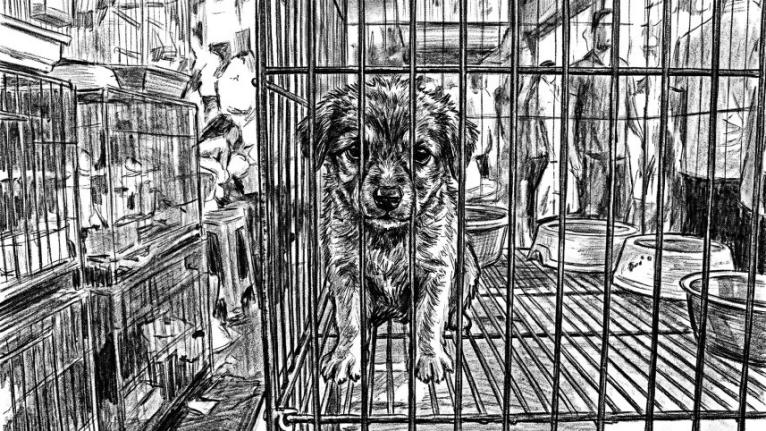
At Katabon, Dhaka’s largest pet market, animals are frequently kept in poor conditions, including dogs on bare iron-rod floors, sick cats in small cages, and birds packed into unventilated shops. While the Animal Welfare Act, 2019 prohibits cruelty, including denying animals food, water, or necessary treatment, critics argue that weak enforcement and legislative loopholes render the law largely ineffective.
Section 6(1)(d) of the Act treats confinement as cruelty only if an animal cannot naturally stand, sit, or lie down. For most animals, that is the entire standard. No cage size, temperature, or airflow requirements are set.
The law’s vague standards make it difficult to prove cruelty in court. Furthermore, section 18 of the Act restricts the filing of cases to the Director General of the Department of Livestock Services or authorized veterinary surgeons, preventing ordinary citizens from initiating legal action despite evidence of abuse. As of 2022, animal welfare groups estimated that only about ten cases had been filed under the Act. Additionally, the government has yet to establish the rules required for the registration of pet shops under section 9, leaving the industry without oversight regarding cage sizes, ventilation, or veterinary standards. Judicial outcomes also vary significantly; while some courts have issued prison sentences for animal cruelty, others have utilized the Probation of Offenders Ordinance, 1960 to avoid sentencing offenders, as seen in a 2024 Feni case.
বাংলাদেশ সময়: ৯:০৭:৪৮ ২৬ বার পঠিত #Animal Welfare #Animal Welfare Act 2019 #Dhaka #Katabon #Legal Reform #Pet Market