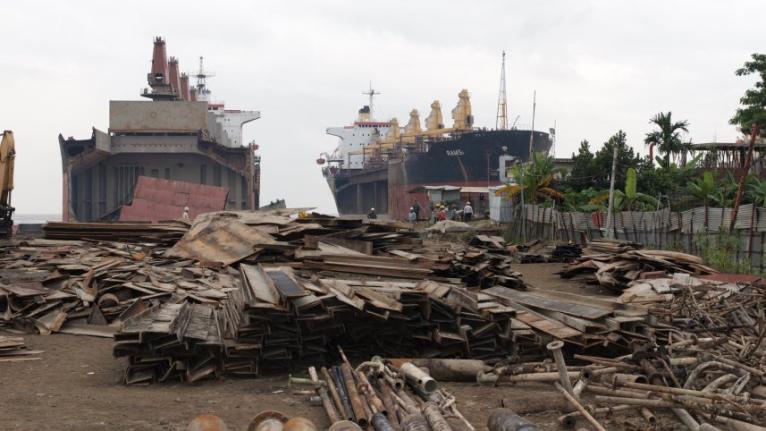
The death of nine ship-breaking yard workers in Sitakunda has raised serious concerns regarding workplace safety and regulatory enforcement. It is suspected that the workers died due to toxic gas exposure inside a confined tank. Allegations suggest that yard management failed to implement necessary ventilation and cleaning precautions before sending workers into the tank. Despite Bangladesh becoming a party to the Hong Kong International Convention for the Safe and Environmentally Sound Recycling of Ships in June 2023, there have been 84 reported accidents since its enforcement, resulting in 15 deaths.
Legal experts point to clear violations of the Ship Breaking and Ship Recycling Rules (SBSR) 2011 and the Bangladesh Labour Act (BLA) 2006, both of which mandate strict safety protocols for confined spaces, including the use of breathing apparatus and constant communication with trained attendants. The Department of Inspection for Factories and Establishments (DIFE) had reportedly identified the yard as non-compliant in February but only filed a case with the Chattogram Labour Court recently, despite having the authority to halt operations earlier.
Victims and their families may seek compensation through the Labour Court or pursue civil litigation based on the principle of strict liability. Furthermore, legal analysts suggest that, following the precedent of CCB Foundation v Bangladesh (2016), a writ petition could be filed against state authorities like DIFE and the Ship Breaking and Recycling Board (SBRB) for their alleged failure to enforce safety regulations, which may constitute a violation of the fundamental right to life.
বাংলাদেশ সময়: ১২:১৩:৫৮ ১৫ বার পঠিত #Bangladesh Labour Act #Compensation #DIFE #Labour Law #Regulatory Failure #Ship Breaking #Sitakunda #Workplace Safety